
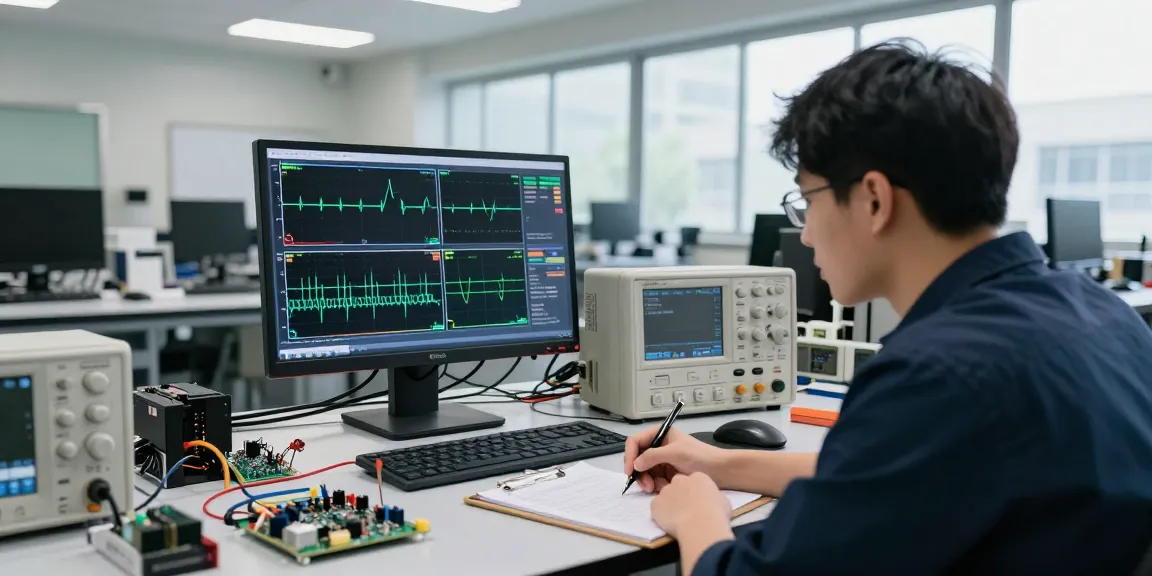
Understanding the Benefits of a Digital Oscilloscope
The advent of digital oscilloscopes has revolutionised the way engineers and technicians approach electronic measurements. Among the leading products in this category is the digital oscilloscope, 4 channel oscilloscope, such as the Hanmatek DOS1104. This oscilloscope not only provides unparalleled accuracy in signal capture but also enhances user experience through advanced features and portability. Understanding the many advantages these sophisticated tools offer is crucial for professionals who seek precision in their testing processes.
What is a 4 Channel Oscilloscope?
A 4-channel oscilloscope is a versatile instrument that can capture and display four separate electrical signals simultaneously. This capability is particularly beneficial for tasks that involve comparing multiple signals, such as in circuit development, testing, and troubleshooting. Unlike traditional 2-channel oscilloscopes, the added channels allow for a more comprehensive analysis of complex electronic systems.
Key Features of the Digital Oscilloscope
- High Bandwidth: The Hanmatek DOS1104 boasts a bandwidth of 110 MHz, which supports the accurate measurement of a wide range of frequencies, essential for modern electronic applications.
- Intuitive User Interface: Its user-friendly interface makes it suitable for both seasoned engineers and beginners, facilitating easy navigation through various settings.
- Multi-channel Functionality: With four independent channels, it enables users to capture and compare multiple signals, enhancing analysis and diagnostics.
- Portable Design: The compact and lightweight design allows it to be used in various environments, from labs to fieldwork, without compromising performance.
- Advanced Triggering: The oscilloscope includes sophisticated triggering capabilities, allowing for precise control over when the signal is captured, which is vital for analysing elusive transient events.
Why Use Multiple Channels in Testing?
The ability to use multiple channels simultaneously is a significant advantage in electronics testing. It allows for the comparison of input and output signals, facilitating the identification of timing discrepancies and phase differences. For instance, in a scenario where an engineer is troubleshooting a switching power converter, they could observe the gate drive, input voltage, output voltage, and feedback signal on four channels at once, pinpointing any timing delays that might be causing instability in the system. This multi-channel observation can be pivotal in complex system analysis.
How to Effectively Use the Hanmatek DOS1104
Using the Hanmatek DOS1104 effectively requires understanding its features and capabilities. Starting with proper setup is essential for obtaining accurate measurements.
Step-by-Step Setup Guide
- Connect the Probes: Attach the supplied probes to the oscilloscope channels. Ensure the probes are correctly grounded for accurate signal capture.
- Configure the Settings: Power on the device and adjust the settings according to your requirements, including vertical scaling and timebase settings.
- Connect the Signals: Input the signals you wish to measure through the designated channels. Make sure to verify that the voltage levels do not exceed the maximum input voltage rating.
- Trigger Settings: Set the triggering mode to stabilise the waveform display. This is key for accurately analysing transient signals.
- Capture and Analyse: Once everything is set, start capturing the signals. Use the oscilloscope’s display features to analyse the waveforms and their characteristics.
Common User Scenarios and Applications
The Hanmatek DOS1104 is designed for a variety of applications, making it an invaluable tool in many fields. Common uses include:
- Electronic Circuit Development: Capture real-time waveforms to analyse circuit behaviour during testing.
- Industrial Maintenance: Diagnose faults in machinery by monitoring electrical signals and ensuring systems operate within specifications.
- Power System Testing: Measure and monitor the stability of power systems and identify potential issues quickly.
- Educational Purposes: Serve as a practical tool for students to learn about electronic principles and waveform analysis.
Tips for Optimising Performance
To maximise the performance of the Hanmatek DOS1104, users should consider the following tips:
- Regular Calibration: Ensure that the oscilloscope is calibrated periodically to maintain accuracy.
- Utilise Math Functions: Make the most of the advanced mathematical functions available to derive useful data from the captured signals.
- Save and Export Data: Use the USB functionality to save and export data for further analysis or reporting.
Comparative Analysis: Hanmatek DOS1104 vs Competitors
In a crowded marketplace, understanding how the Hanmatek DOS1104 stands up against its competitors can help consumers make more informed decisions.
Feature Comparison with Other Digital Oscilloscopes
Compared to other models in the same price range, the DOS1104 offers superior bandwidth and multi-channel capabilities, making it an ideal option for those needing versatility in their measurement tools. Many competing models may lack the robust feature set that the DOS1104 presents, particularly in terms of portability and user-friendliness.
Price vs Performance: Which is Worth It?
When analysing price versus performance, the Hanmatek DOS1104 excels by offering high-quality specifications at a reasonable price point. With its extensive features and reliable performance, it provides excellent value for money, particularly for those who require precision without breaking the bank.
User Feedback and Expert Reviews
Feedback from customers and professional reviewers highlights the DOS1104’s reliability and performance, with many praising its ease of use and effective capturing capabilities. Such positive reviews reinforce its standing as a top choice for both hobbyists and professionals alike.
Troubleshooting Common Issues with Digital Oscilloscopes
Even high-quality instruments like the Hanmatek DOS1104 can encounter issues. However, understanding how to troubleshoot these problems can enhance usability.
Identifying Signal Acquisition Problems
Signal acquisition issues can often manifest as distorted or unclear waveforms. Common causes may include incorrect probe connections or settings. Always check your setup before concluding that the oscilloscope has malfunctioned.
Resolving Calibration and Accuracy Issues
Calibration drift can lead to inaccuracies over time. Regularly calibrate the oscilloscope according to manufacturer recommendations to ensure ongoing precision in measurements.
Understanding Waveform Interpretation Errors
Misinterpretation of waveforms can lead to incorrect conclusions about circuit behaviour. It’s essential to understand the characteristics of the signals being measured and how they relate to the physical processes occurring in the circuit.
Future Trends in Digital Oscilloscope Technology
The digital oscilloscope market is continually evolving, with several emerging trends expected to shape its future.
Upcoming Innovations in Oscilloscope Features
Future models are likely to include enhanced connectivity options, such as Bluetooth and Wi-Fi capabilities, allowing for easier data sharing and remote access. Additionally, we may see advancements in display technologies that improve readability and usability.
Impact of AI on Signal Analysis
Artificial intelligence (AI) is set to enhance signal analysis by automating the interpretation of complex waveforms and providing users with actionable insights. This could significantly reduce the time technicians spend analysing data.
Predictions for 2026 and Beyond
By 2026, we can anticipate that digital oscilloscopes will become increasingly integrated with software solutions, enabling cloud-based data analysis and real-time collaboration among teams. As technology progresses, the demand for more advanced features such as 32-bit resolution oscilloscopes may emerge, pushing the boundaries of measurement accuracy.